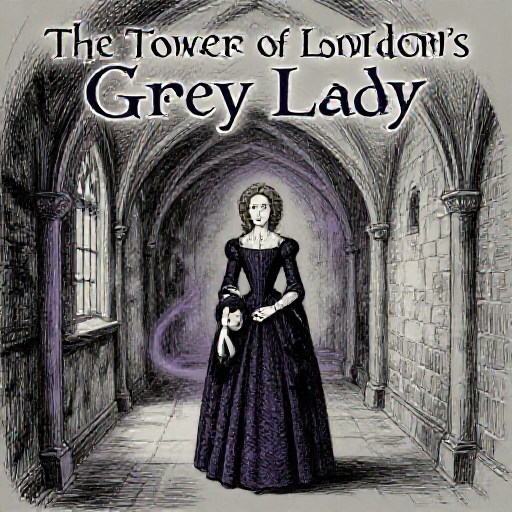
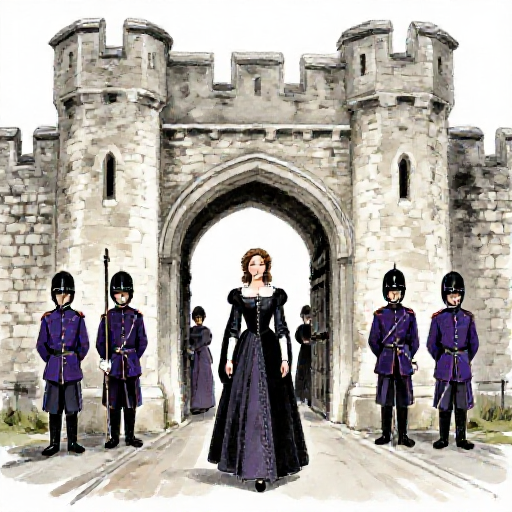
Chapter One: The Charge
The charge was adultery. Six men named. Treason by another description.
Henry VIII needed Anne Boleyn gone and a reason to be rid of her, and in 1536 reasons were not hard to manufacture. The court complied. The evidence was thin enough that even some of her accusers privately doubted it, but doubt was not the point.
She was taken to the Tower of London on May 2nd, 1536. She had been Queen of England. She had slept in the royal apartments. She had once been the most powerful woman in the country.
Now she was a prisoner in the same building where she had waited, three years earlier, for her coronation.
The Tower holds many things. It always has. It had held prisoners for four hundred years before Anne arrived, and it would hold them for four hundred years more.
She was twenty-eight years old, approximately. No one had kept exact records of her birth.
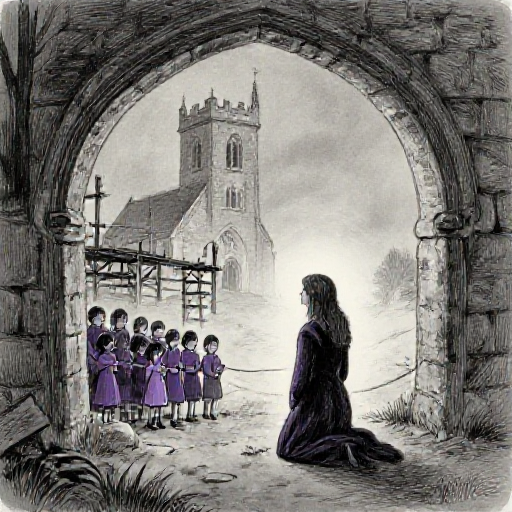
Chapter Two: The Execution
They brought her to Tower Green on the morning of May 19th, 1536.
She gave a short speech, careful and controlled, that praised the king. This was expected. This was how it was done. She did not name the charges as false, though she knew they were. She thanked the people for witnessing her death. She asked them to pray for her.
The swordsman was French. Imported specially. A beheading by sword rather than axe was considered a mercy.
She knelt upright, without a block. The blow was clean.
She was buried without ceremony in the Chapel of St. Peter ad Vincula, inside the Tower walls, wrapped in an arrow chest because no one had prepared a coffin. Her head was placed with her body, which was a consideration not always extended.
The chapel floor was unmarked above her grave for three hundred years.
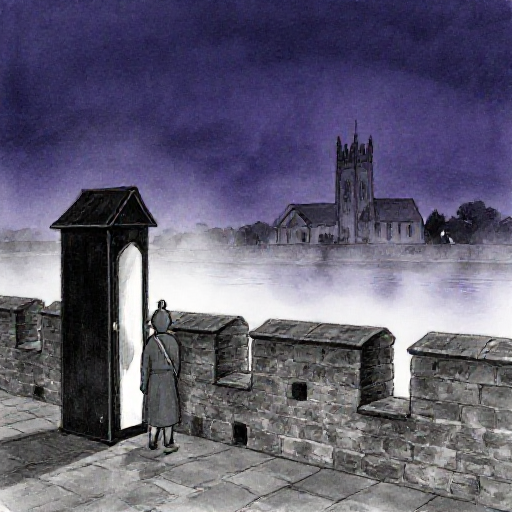
Chapter Three: The Sentries
The Tower of London has been garrisoned continuously since the Norman Conquest. There have always been soldiers there, standing watch through the night, in the cold and the fog that rolls off the Thames.
They started reporting her in the late 16th century.
A woman in grey, moving along the walls near the chapel. Sometimes near the Bloody Tower, near the room where she waited before her execution. Moving slowly, as if she is looking at something specific that others cannot see.
The reports are consistent across four hundred years of garrison records: grey dress, dark hair, a slight figure, moving without sound. Sometimes she carries her head.
The sentries who see her do not, as a rule, announce the sighting to their superiors. The ones who do find that the Tower has a long institutional memory. The officers have heard this before.
Chapter Four: 1864
There is one sighting in the official record, which is unusual.
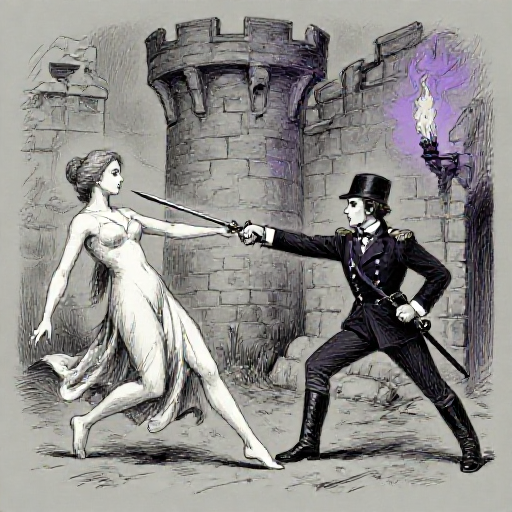
On a night in 1864, a sentry named Edmund Lenthal Swifte, standing his post near the Lieutenant's Lodgings, encountered a figure in white advancing toward him. He challenged her. She did not stop. He fixed his bayonet and ran it through her.
The bayonet passed through nothing. The figure continued moving. The sentry collapsed.
He was found unconscious and was brought before a court martial for deserting his post and for the testimony he gave when he came to. Two other sentries corroborated that they had seen the figure from a distance. The court martial proceeded anyway. The charge was eventually reduced. The official record contains the full account.
No one at the court martial provided an explanation for what the sentry had encountered.
Chapter Five: What She Does
She does not speak. This is noted consistently.
Unlike many of the Tower's reported ghosts, who have been heard to weep or call out or give fragments of speech, Anne Boleyn says nothing. She moves along the walls near the chapel and the Bloody Tower and the White Tower, and she looks at things, and she does not speak.
She moves through walls without stopping, as if the walls are a relatively recent addition to a place she knew differently. She may be. The Tower has been modified substantially over the centuries since her death.
She has been seen on the anniversary of her execution, May 19th, more often than other nights. She has been seen in June. In October. In February, in the cold, moving along the outer wall in the grey London dawn.
She appears to be looking for something.
She has had nearly five hundred years to look.
She has not found it.
Chapter Six: The Chapel
The Chapel of St. Peter ad Vincula stands inside the Tower walls, small and plain and very old.
Anne Boleyn is buried there, beneath the floor, with other executed prisoners nearby. Catherine Howard, her cousin, also beheaded, is a few feet away. Thomas More is there. Jane Boleyn. Others whose names are less remembered.
In the 19th century, during renovations, the graves were identified and marked properly for the first time. A memorial plaque now lists the names.
Visitors to the chapel report a particular stillness there. Not the theatrical stillness of a place trying to be eerie. The actual stillness of a room that has absorbed a great deal of history and has nothing left to prove.
The Grey Lady is seen most often between the chapel and the Bloody Tower. If you are standing on that path at dusk, you will not hear footsteps. You will not hear anything.
The cold will arrive first.
The True History
Anne Boleyn was Queen of England from 1533 to 1536, the second wife of Henry VIII and mother of the future Queen Elizabeth I. She was arrested on charges of adultery, incest, and high treason in May 1536 and executed on Tower Green on May 19th of that year. Modern historians regard the charges as almost certainly fabricated; the most likely motivation was Henry's desire to remarry and produce a male heir, combined with Anne's growing political enemies at court. The men executed alongside her, including her own brother, were almost certainly innocent.
She was buried in the Chapel of St. Peter ad Vincula inside the Tower of London, initially without proper ceremony or a marked grave. In 1876, Queen Victoria ordered an investigation of the burials beneath the chapel floor, and a skeleton identified as Anne's was placed in a proper coffin and reinterred with a marked tile. The identification was based on skeletal features consistent with historical descriptions.
The 1864 court martial of a sentry for encountering what witnesses described as Anne Boleyn's ghost is one of the more unusual documents in the Tower's administrative records. It is cited in multiple serious historical accounts of the Tower's history. The Tower of London, now managed by Historic Royal Palaces, receives approximately three million visitors per year. Ghost tours operate regularly. Yeoman Warders, the Tower's resident guards, are known to tell visitors: of all the ghosts reported in the Tower's history, Anne Boleyn is seen most often.